One exchange, two very different advantages: real control and flexibility for the wholesalers who plug into it, and a better connection for the businesses who never see it.
By Mark Rafferty, CEO, FibreconX
Most people who buy an internet connection for their business never think about who owns the fibre underneath it. They probably shouldn’t have to. But I think about it constantly, because for the company selling them that connection, who owns the underlying network changes everything about what they can charge, how fast they can move, and how much room they have to build a genuinely different product.
A Market Where Wholesalers Don’t Control Their Own Product
For most of the last decade, Australia’s wholesale fibre resellers have bought their core product from the same handful of carriers who also sell directly to the resellers’ own customers. That’s a margin problem, but it’s a bigger control problem. When you don’t own the network, you don’t own your product either. Your pricing, your service levels, your customer experience, all of it is shaped by someone else’s commercial priorities, not yours.
We built FibreconX to remove that entirely: a wholesale-only network, with no retail arm and no reason to compete with the partners buying from us. FibreXchange is the product that turns that structural difference into something wholesale partners can actually build a business on.
What Open Access Actually Means
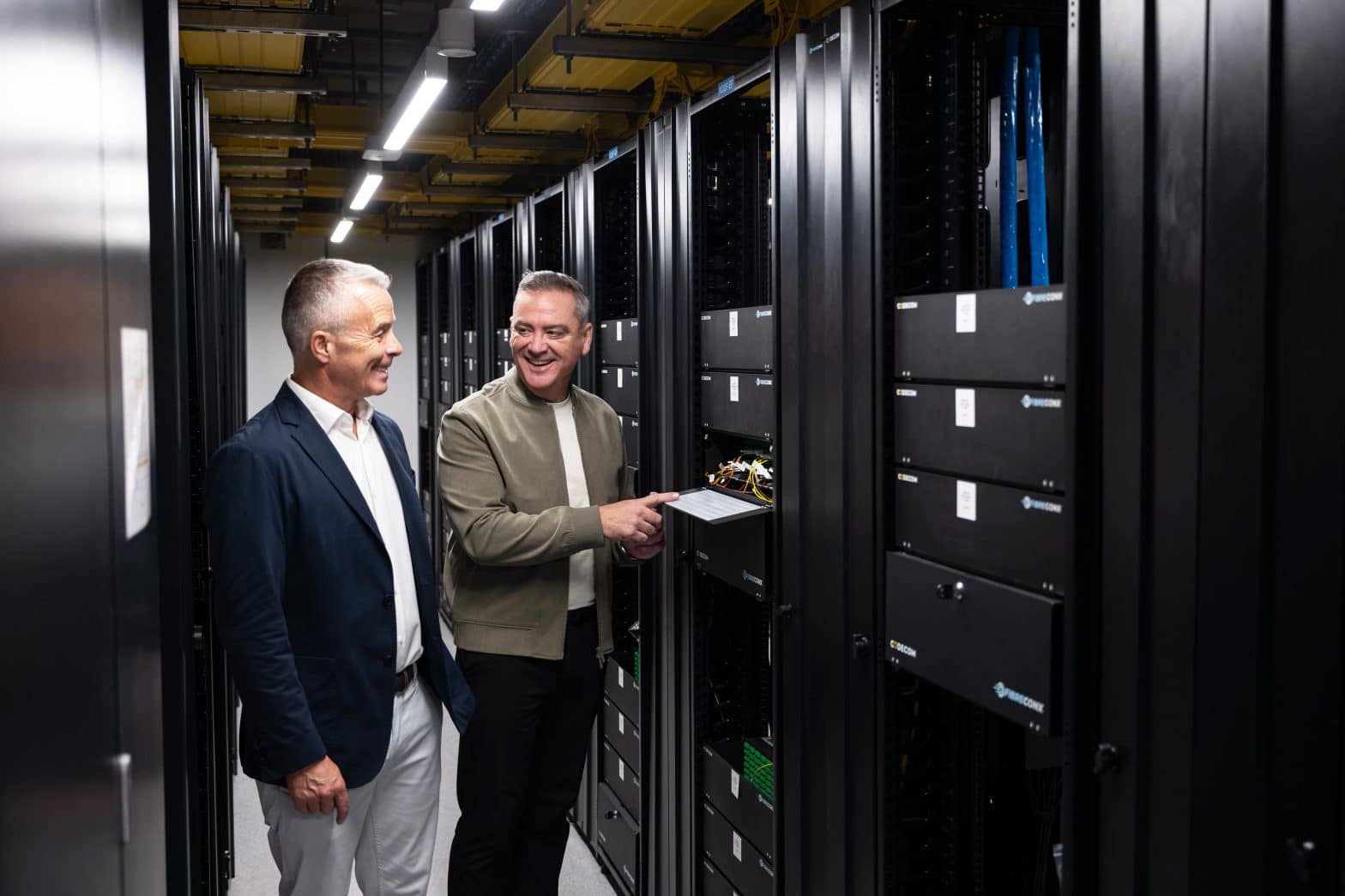
FibreXchange is a physical exchange we purpose-built in the middle of the Sydney and Melbourne CBDs, pre-connected to every major commercial building in both cities. Instead of selling partners a finished product off our own switches, the exchange invites them to bring their own switch and house it there, for free.
From that point, the fibre between any data centre and any CBD building belongs to the partner using it, not to us. Your switch. Your fibre. Your customer. We supply the physical layer and step out of the way.
“It’s a really big open-access fibre network. Anyone can use it without capital intensity.”
Who Benefits from Open-Access Fibre?
The answer depends on which side of the exchange you’re sitting on.
If you’re a wholesaler: Own the product, not just the price
Our wholesale and carrier partners are already building products on FibreXchange. Neither had to build or buy a single metre of duct to do it, and neither is locked into a fixed product they must resell as-is.
That’s the real shift. You decide the speed tier, from 1Gb through to 100Gb and beyond. You decide the SLA, the pricing structure, the customer experience end to end. You’re not reselling someone else’s product with your logo on it, you’re building your own on infrastructure you don’t have to own or maintain. No contracts lock either side in, and because we handle the physical network end to end, partners aren’t left managing provisioning delays and legacy support queues themselves.
It also happens to make better commercial sense than the industry’s usual thin wholesale margins, with partners landing around 60% gross margin instead of the usual 10%, but the bigger opportunity is what that control lets you actually build.
If you’re the customer: A better connection, built to fit your needs
The business buying connectivity from one of these partners doesn’t need to know any of this. They’re not shopping for an exchange or a switch or a duct network. They’re comparing providers on price, speed and how quickly they can get connected, the same way they always have.
What’s changed is what their existing provider can now offer them, and it shows up in two practical ways. First, speed: the fibre to almost every major CBD building is already built, pre-spliced and waiting, so a partner on FibreXchange isn’t quoting a build timeline measured in weeks, they’re connecting a customer to fibre that’s already there. Second, fit: because the partner owns and controls the whole product, from 1Gb through to 400Gb, the connection can actually be sized to what the customer needs, not squeezed into whichever fixed tier a retail incumbent happens to sell. The customer just experiences it as a faster, more tailored service from a provider they already trust.
A Different Kind of Fibre Company
What ties both sides of this together is the same underlying decision I made when we started building this network: we don’t compete with the businesses that rely on us, at either end of the chain. Our wholesale partners get a network they can build a genuinely differentiated product on and actually control. Their customers get the benefit of that flexibility without ever needing to understand where it came from.
If you’d like to learn more about our open-access fibre reach out to Nick Healey at nick.healey@fibreconx.com.au.